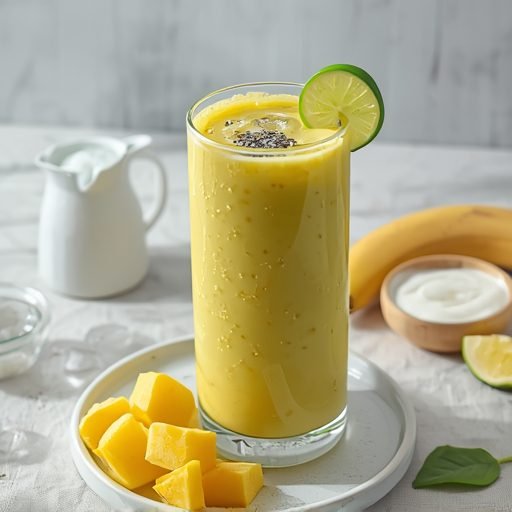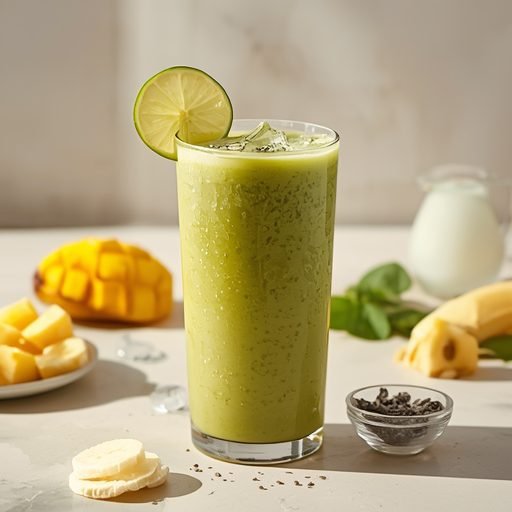
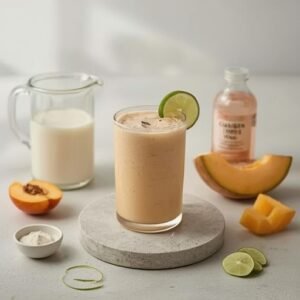
When your skin feels dull, tight, or thirsty, hydration needs to come from more than a good moisturizer. What you drink matters, too—and few things are as refreshing as a cold, fruit-forward smoothie that doubles as a beauty-supporting treat. This Skin Hydration Desert Rosewater Apricot-Cantaloupe Smoothie is designed to taste like a light, floral dessert while packing in ingredients often associated with glowing skin: water-rich melon, antioxidant-rich apricots, soothing aloe, and omega-3-friendly chia. The result is silky-smooth, lightly frothy, and brightened with a hint of lime zest and rose water for an elevated “spa day” vibe at home.
If you’re searching for a hydrating smoothie recipe with cantaloupe, apricots, aloe vera gel, and collagen peptides, this is a delicious place to start—especially when you want something cold, quick, and genuinely satisfying.
Recipe Name: Skin Hydration Desert Rosewater Apricot-Cantaloupe Smoothie
Ingredients
- Chilled oat milk
- Ripe apricots (pitted)
- Cantaloupe cubes
- Peeled jicama chunks
- Aloe vera gel
- Collagen peptides
- Ground chia seeds
- Rose water
- Fresh lime zest
Instructions
- Add chilled oat milk to a blender.
- Add apricots, cantaloupe, jicama, and aloe vera gel.
- Add collagen peptides, ground chia seeds, rose water, and fresh lime zest.
- Blend on high until silky-smooth and lightly frothy (30–60 seconds).
- Rest 2 minutes to let chia thicken, then blend again briefly.
- Pour and serve cold.
Why this smoothie supports hydration and “glow”
This recipe is built around ingredients that contribute to hydration, a strong skin barrier, and overall wellness. While no single drink is a magic fix, combining water-rich produce with fiber, healthy fats, and targeted add-ins can support a more resilient, radiant look over time.
1) High water content from cantaloupe, apricots, and jicama
Cantaloupe is famously hydrating and naturally sweet, giving the smoothie a refreshing base without needing added sugar. Apricots add juicy texture and natural tang-sweet flavor. Jicama is a crisp, water-rich root vegetable that blends surprisingly well and helps lighten the mouthfeel so the smoothie feels cooling rather than heavy.
2) Skin-supportive nutrients and antioxidants
Apricots and cantaloupe provide carotenoids and vitamin C, nutrients commonly linked to antioxidant support. Vitamin C is also well known for its role in collagen formation in the body, which makes it a smart partner for collagen peptides if you use them.
3) Aloe vera gel for a soothing, fresh finish
Aloe vera gel is popular in wellness routines for its soothing properties. In smoothies, it lends a clean, slightly “cool” texture that pairs beautifully with melon and floral rose water. Use a food-grade aloe vera gel intended for internal use.
4) Collagen peptides for beauty-from-within routines
Collagen peptides are widely used to support skin elasticity and hydration as part of a consistent routine. They blend easily and are typically neutral-tasting, so they won’t interfere with the delicate apricot-cantaloupe flavor profile.
5) Chia for thickness, fiber, and omega-3s
Ground chia seeds help thicken the smoothie after a short rest, creating that “dessert-smoothie” texture. Chia also provides fiber and plant-based omega-3 fatty acids, which can support overall wellness. Grinding them helps with a smoother finish and easier blending.
6) Rose water and lime zest for a bright, dessert-like aroma
Rose water turns this from a standard fruit smoothie into something that feels intentionally crafted—floral, lifted, and elegant. Lime zest adds a sparkling citrus note that balances sweetness and makes the flavors pop without adding extra acidity from juice.
Variations to try
- Extra-cold, slushie style: Freeze cantaloupe cubes ahead of time, then blend with chilled oat milk for a thicker, frosty texture.
- Protein-boosted version: Add a little more collagen peptides, or pair with a scoop of a neutral or vanilla plant protein if you want a more filling breakfast smoothie.
- Lower-sugar feel: Increase jicama chunks slightly and use very ripe cantaloupe for sweetness that tastes bright rather than sugary.
- Creamier “dessert bowl” option: Reduce oat milk a bit, then pour into a bowl and top with extra cantaloupe cubes and a pinch more lime zest.
- Warm-spice twist: Add a tiny pinch of cardamom or cinnamon to complement the rose water and apricot, turning it into a more “Middle Eastern dessert” flavor profile.
- Citrus swap: Replace lime zest with orange zest for a softer, sweeter aroma that still pairs beautifully with rose.
Tips for the best silky-smooth texture
- Use chilled ingredients: Cold oat milk and cold fruit make the smoothie taste cleaner and more refreshing.
- Don’t skip the 2-minute rest: That short pause lets the ground chia hydrate and thicken, improving body and creaminess.
- Go easy on rose water: A little is luxurious; too much can taste perfumey. Start small, then adjust next time.
- Blend twice for finesse: The brief second blend after resting creates a smoother, lightly frothy finish.
Conclusion
The Skin Hydration Desert Rosewater Apricot-Cantaloupe Smoothie is a simple, beautiful way to support hydration while enjoying a flavor that feels like a treat. With chilled oat milk, ripe apricots, cantaloupe, crisp jicama, soothing aloe vera gel, collagen peptides, and thickening chia, it’s designed for a silky texture and a “glow routine” energy—finished with rose water and lime zest for that desert-rose elegance. Blend it up when you want something refreshing, skin-friendly, and genuinely delicious, then serve it cold and let the aroma do the rest.