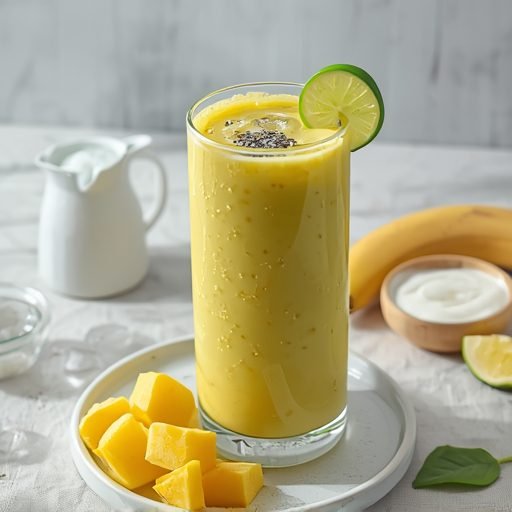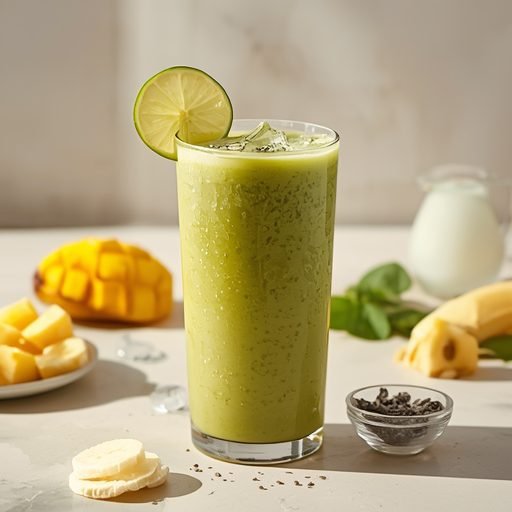
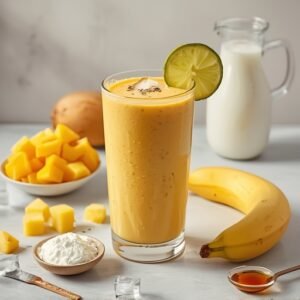
When you’re craving something cold, sunny, and satisfying, a tropical smoothie is hard to beat. This Tropical Mango Pineapple Protein Smoothie delivers the bright, vacation-like flavor of mango and pineapple with the staying power of protein-rich Greek yogurt and fiber-packed chia seeds. It’s the kind of quick breakfast smoothie that also works as a post-workout refuel, an afternoon pick-me-up, or a healthy dessert substitute—without feeling heavy.
Even better: this mango pineapple smoothie is made with simple, easy-to-find ingredients, and it comes together in minutes. Using frozen fruit keeps the texture thick and creamy while eliminating the need for fancy add-ins. If you’re looking for a high-protein smoothie that tastes like a tropical treat, this recipe is a reliable go-to.
Recipe Name: Tropical Mango Pineapple Protein Smoothie
Ingredients
- 1 cup frozen mango chunks
- 1 cup frozen pineapple chunks
- 1 ripe banana
- 3/4 cup Greek yogurt (plain or vanilla)
- 1 cup coconut water (or milk of choice)
- 1 tablespoon chia seeds
- 1 tablespoon honey or maple syrup (optional)
- 1/2 teaspoon vanilla extract
- Ice cubes (optional, for thicker texture)
Instructions
- Add coconut water (or milk) to the blender first. This helps the blades move smoothly and prevents sticking.
- Add Greek yogurt, banana, frozen mango, and frozen pineapple.
- Add chia seeds, vanilla extract, and sweetener (if using).
- Blend on high until completely smooth, stopping to scrape down the sides as needed.
- If the smoothie is too thick, add a splash more liquid; if too thin, add a handful of ice or more frozen fruit and blend again.
- Pour into a glass and serve immediately.
Health Benefits of This Mango Pineapple Protein Smoothie
This smoothie isn’t just delicious—it’s built from ingredients that support energy, digestion, and recovery. Here are a few standout benefits:
- High-quality protein for fullness and muscle support: Greek yogurt adds a solid protein boost, which can help you feel satisfied longer and support muscle repair after workouts.
- Fiber for digestion and steady energy: Chia seeds and fruit provide fiber that supports gut health and helps slow digestion for more stable energy (instead of a quick sugar spike and crash).
- Hydration from coconut water: Coconut water is a light, refreshing base that can help with hydration—especially useful in warm weather or after exercise.
- Vitamin C and antioxidants: Pineapple and mango are naturally rich in vitamin C and plant compounds that help support immune health and overall wellness.
- Natural sweetness with minimal added sugar: The banana, mango, and pineapple bring plenty of sweetness. The optional honey or maple syrup is there only if you prefer it sweeter.
Variations and Easy Add-Ins
One of the best things about a tropical protein smoothie is how flexible it is. You can customize it based on your taste, dietary needs, or what you have on hand.
- Make it higher protein: Add a scoop of vanilla or unflavored protein powder, or increase the Greek yogurt to 1 cup. If you’re using protein powder, you may want a bit more liquid to keep blending smooth.
- Dairy-free option: Swap the Greek yogurt for a thick plant-based yogurt (coconut or almond-based works well). Use coconut milk, oat milk, or almond milk in place of coconut water if you want a creamier texture.
- Extra creamy “tropical milkshake” texture: Use canned light coconut milk (or regular coconut milk) instead of coconut water. This turns the smoothie into a richer, dessert-like drink.
- Green smoothie twist: Add a handful of baby spinach. It blends in easily, won’t overpower the tropical flavor, and adds extra micronutrients.
- More fiber and thickness: Add 1/4 cup rolled oats. This makes the smoothie more filling—great for a breakfast smoothie that can carry you to lunch.
- Tart and bright flavor boost: Add a squeeze of lime juice. Lime pairs beautifully with mango and pineapple and helps balance sweetness.
- Kid-friendly smoothie pops: Pour leftovers into popsicle molds and freeze. It’s a fun way to turn a healthy smoothie into a snack.
Tips for the Best Texture and Flavor
- Start with liquid: Always add coconut water or milk first so the blender can circulate the frozen fruit easily.
- Use frozen fruit for thickness: Frozen mango and frozen pineapple create that thick, spoonable smoothie texture without needing much ice.
- Adjust sweetness after blending: Blend first and taste. Depending on the ripeness of your banana and the sweetness of your fruit, you may not need any honey or maple syrup.
- Let chia seeds sit (optional): If you like a thicker smoothie, let it sit for 3–5 minutes after blending. Chia seeds absorb liquid and naturally thicken the drink.
Conclusion
This Tropical Mango Pineapple Protein Smoothie is a fast, refreshing way to get fruit, protein, and fiber in one glass. With creamy Greek yogurt, hydrating coconut water, and naturally sweet tropical fruit, it’s a simple recipe that tastes like a treat but fits into a healthy routine. Keep a bag of frozen mango and pineapple in your freezer, and you’ll always be just a few minutes away from a smoothie that’s bright, satisfying, and easy to customize.